
Growth
Growth Is an Operating Discipline, Not a Goal
Most of the business owners we have worked with want their organisations to grow. The interesting part is what happens to the organisation as that growth starts to arrive.
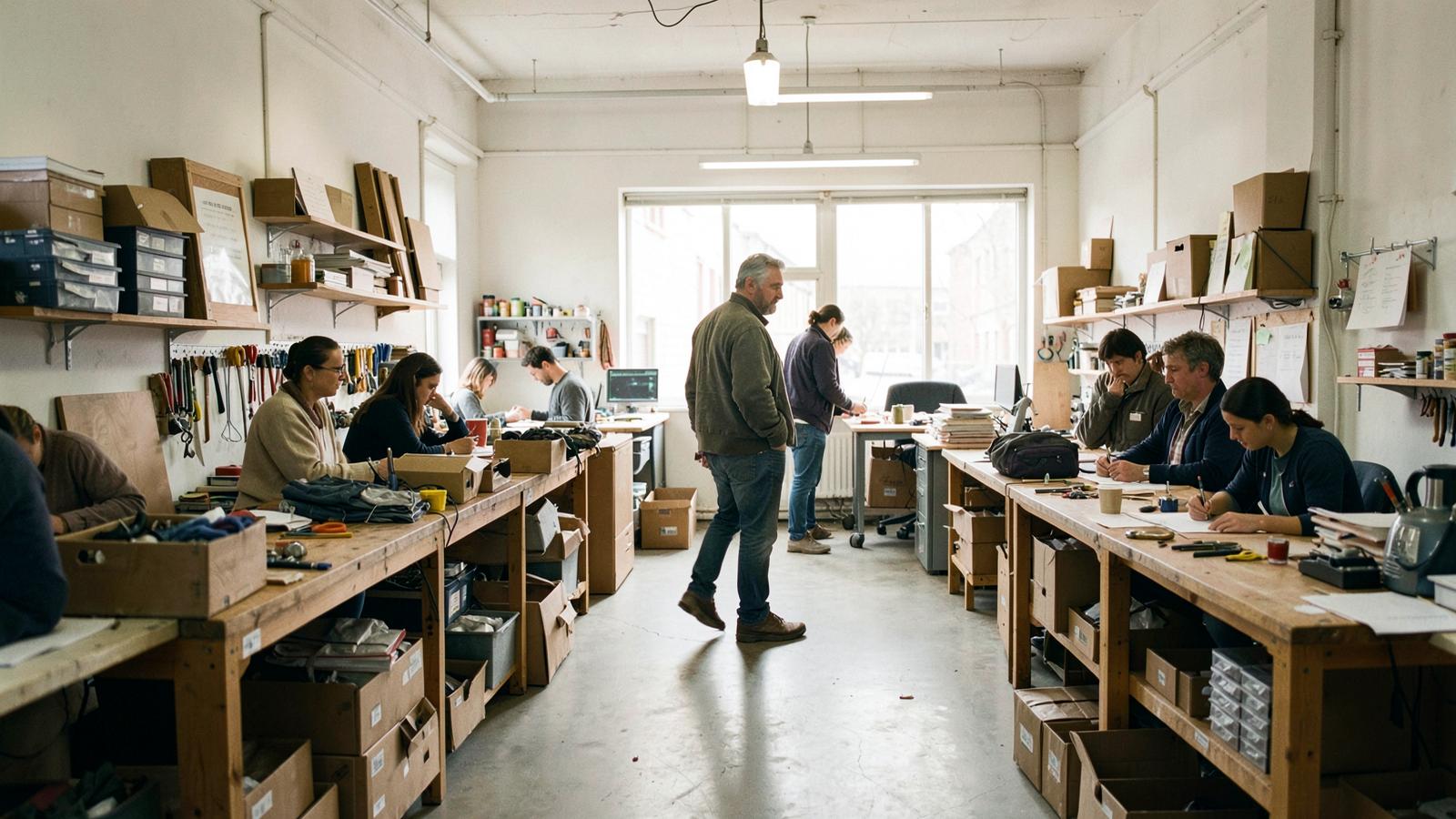
Most of the business owners we have worked with want their organisations to grow in some form. That might mean increasing revenue and profitability, winning larger customers, employing more people, entering new markets or building a business that is ultimately less dependent on them personally.
The interesting part is what happens to the organisation as that growth starts to arrive.
Over many years of working with SME owners and leadership teams, we have seen businesses discover that growth doesn't simply create a larger version of the company they already had. At some point, the way the business is led and managed has to develop as well.
What worked brilliantly with 15 employees may become increasingly difficult with 50. The habits that helped a business reach its first £1 million of revenue may not be the ones that take it through the next stage.
More sales don't automatically create a better business
It is understandable that growth conversations tend to start with sales. Businesses need customers and revenue, and improving the commercial engine is often essential.
However, increasing demand without developing the organisation behind it can simply create a different set of problems.
If sales increased substantially over the next twelve months, could operations absorb the additional work? Would existing managers cope with larger teams? Could customer service maintain its standards? Would the owner still be able to approve the same proportion of decisions? Would cash flow support the additional activity?
These questions matter because growth has a habit of exposing weaknesses that were much easier to manage when the organisation was smaller.
Informality is useful until the business outgrows it
One of the great strengths of a small business is that it can operate informally.
People talk to each other. Decisions can be made quickly. The owner knows most of the customers and usually has a good idea of what everybody is doing. Employees often understand how things work because they have been part of the business for years.
Nobody should be in a rush to replace that with unnecessary bureaucracy.
The problem comes when the organisation has grown but continues to rely on the same informal mechanisms. More people join, teams develop, managers are appointed and knowledge becomes spread across the business. The owner can no longer carry all of the important context personally.
The organisation then needs greater clarity without becoming cumbersome, and finding that balance is an important part of scaling.
The owner's job changes too
In the early stages of a business, the founder may genuinely be the best salesperson, problem solver, recruiter and decision maker. Being heavily involved in everything may be exactly what the business needs.
Growth gradually changes the nature of that role.
The owner increasingly needs other people who can make good decisions, manage teams, deal with customers and solve problems without everything coming back to them.
That requires more than simply handing out additional tasks. People need clarity about what they are responsible for, the authority to make appropriate decisions and the capability to handle that responsibility.
Two parts of the business need to grow together
We often find it useful to think about growth from two perspectives.
The first is commercial: customers, proposition, pricing, sales, marketing and revenue.
The second is organisational: leadership, people, management capability, structure, processes, accountability and execution.
Problems appear when one develops much faster than the other. A business can win plenty of new customers but struggle to serve them consistently. It can recruit more employees without developing the managers who need to lead them. Revenue can increase while complexity and cost increase even faster.
Sustainable growth requires the commercial and organisational sides of the business to develop together.
What does the next version of the business require?
There isn't a single formula for scaling an SME, because the constraints are different in every organisation.
We tend to look at where decisions are being made, what still depends unnecessarily on the owner, whether managers have genuine responsibility, where commercial opportunities are being lost, which processes have stopped working well and whether the organisation has the capability it will need for its next stage.
Those conversations often reveal that the biggest restriction on growth isn't the opportunity in the market. It is something within the organisation that hasn't yet caught up.
Our perspective
Having worked with hundreds of SME owners over the years, we have become wary of treating growth simply as a revenue target.
A business is a connected system. Sales affect operations, recruitment affects management, leadership affects execution and strategy influences the capability the organisation needs.
For us, sustainable growth is about developing the business behind the numbers so that increasing success doesn't simply make the organisation increasingly difficult to run.